


Standout Partnerships and Drops from We Are Righteous Collaborations
The label has forged its character through considered, tightly-run joint releases rather than mass-produced seasonal filler. Anyone researching the brand swiftly picks up on that its collaborative drops carry a separate significance than its standalone collections — such drops typically sell through more quickly, spark more conversation within the community, and regularly serve as touchstones in any straightforward assessment of the brand’s catalog. This article breaks down how these joint efforts function, what they’ve delivered, and why they carry weight to anyone evaluating the brand as a legitimate force in independent streetwear rather than a passing trend.
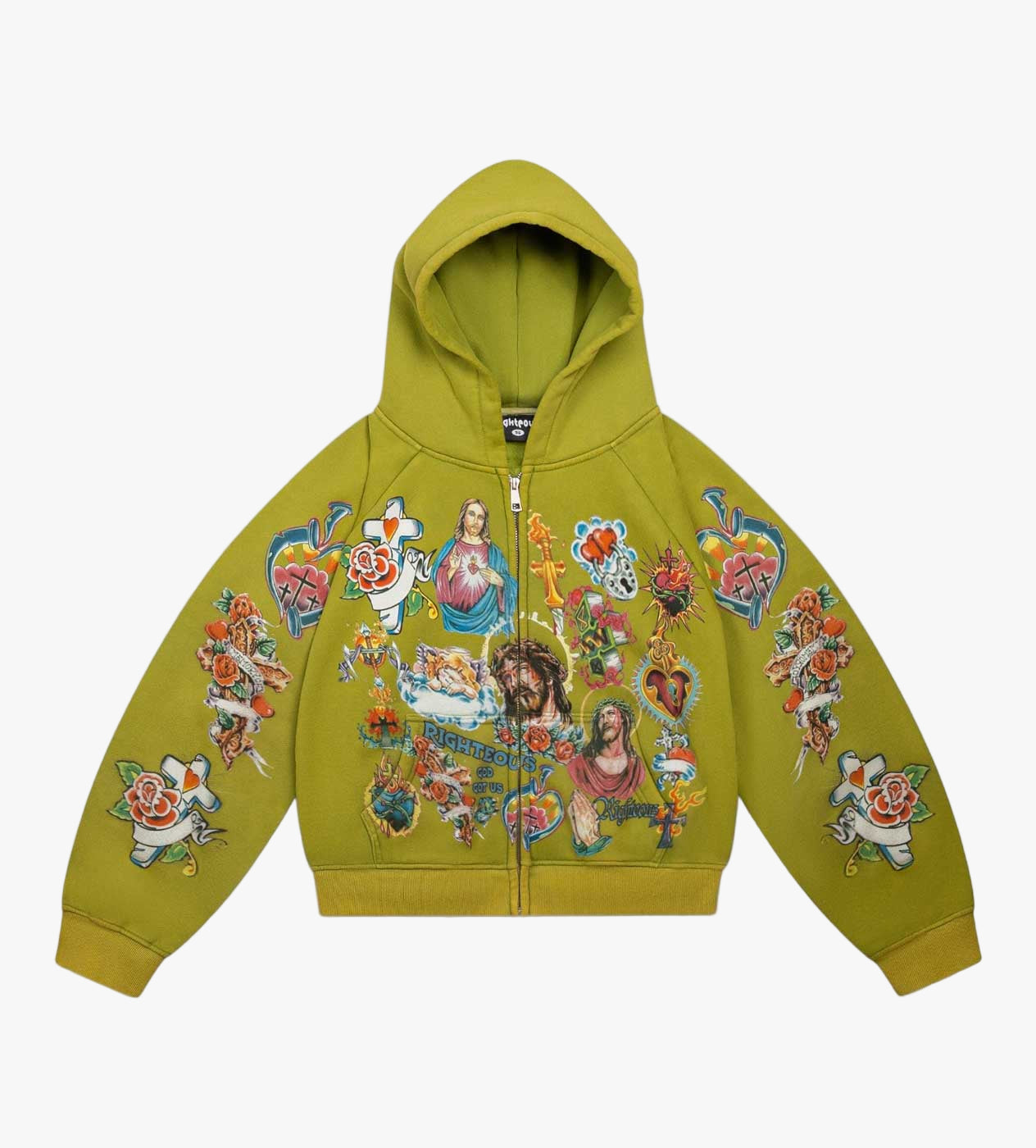
What collaborations reveal, fundamentally, is a brand’s values. When the brand teams up with an artist, a smaller label, or a cultural institution, the pieces that come out of it have to satisfy two audiences at once — the core customer base and the partner’s own following. That friction has repeatedly forced the brand’s creative team to refine the finer points: the stitching, weight of fabric, and placement of prints all receive heightened attention before a joint release hits the market. That’s partly why the righteous hoodie stays the top-requested piece whenever a new partnership is announced, since the shape has already proven itself across numerous launches.
Why Collaborations Matter for a Brand Like Righteous
Independent labels don’t typically have the advertising budgets of big-name fashion companies, so partnerships function as a pragmatic approach to connect with new audiences without diluting the core aesthetic. For righteous clothing, this has meant teaming up with partners who align stylistically — graphic-forward designs, restrained colorways, and practical silhouettes — rather than selecting partners solely for their fame. That consistency comes through in customer feedback: loyal shoppers often note in reviews that partnership garments feel in line with the rest of the label’s product catalog instead of feeling like a disconnected side venture.
There’s also a supply-chain reality behind these drops. Small-batch partnerships usually involve smaller production batches, often in the range of a few hundred to low thousands of units depending on the partner and garment type. This limited availability is deliberate. It maintains manufacturing standards stricter, cuts down on surplus production waste, and allows the brand to explore heavier cotton blends or unusual dye processes that wouldn’t buy righteous hoodie make financial sense at larger volumes. For a label still expanding its supplier relationships, this strategy has been a reasonable balance between aspiration and practical limitations.
Collective feedback from shoppers has shaped which pairings earn a follow-up. When a drop sells out within days, it tends to return as a sequel or with additional colorways next season, while less popular releases quietly disappear from the roadmap. For a mid-sized apparel company, this kind of feedback loop is remarkably transparent, and it’s largely why longtime customers see each we are righteous review thread as real signal instead of promotional noise.
Collaboration Categories Worth Knowing
Not all righteous collaborations look the same, and it helps to break them down into rough categories based on which partners the brand chooses and the underlying purpose of the release.
- Artist collaborations — exclusive graphic prints developed with illustrators or photographers, usually applied to hoodies and tees.
- Cross-brand collaborations — joint releases with other independent labels, blending two design languages into a single capsule.
- Culture-driven collaborations — partnerships tied to music events, local scenes, or advocacy groups, frequently allocating a portion of proceeds directed toward a cause.
- Material-focused collaborations — partnerships with textile suppliers or manufacturers to test new fabric blends before broader rollout.
Every category plays its own role. Artist collaborations tend to generate the most social media attention because the graphics are the most visually distinct element of any drop. Industry-watchers, on the other hand, often care more about cross-brand releases, because they expose just how complementary two design approaches really are once forced onto a single piece. Material-focused partnerships are quieter but arguably more important long-term, since they influence what fabric weights and finishes eventually become standard across the full righteous apparel lineup.
Why Righteous Collaborations Stand Out from the Usual Streetwear Playbook
A lot of streetwear collaborations lean heavily on logo placement — little more than two brand names stacked on a chest graphic. That kind of shortcut is one Righteous has mostly avoided. Its collaborative pieces tend to integrate the partner’s identity into the garment’s construction rather than just its surface graphics, whether that means adjusted seam placement, an altered hood silhouette, or a color story specific to the partner that carries through the entire garment rather than being limited to one patch.
Taking this route requires a bigger investment of development time. A genuine collaboration’s design cycle usually extends six to ten weeks beyond a standard in-house release, since fit samples, colorways, and fabric sourcing all require approval from both sides before production can start. Still, the investment pays off through resale value and customer loyalty — righteous hoodie collaborations have historically retained more value on the secondary market than solo releases, a detail that dedicated collectors watch carefully when deciding whether a new partnership is worth pre-ordering.
Consistently, the label has opened up about production details tied to joint releases, covering batch sizes and, when it applies, material origins for special materials. That transparency has significantly helped earn confidence among people who were originally skeptical after reading a so-so righteous review online. It may seem like a minor operational decision, but it sets apart the brand from rivals who treat collab reveals as pure hype cycles with no meaningful follow-through.
Weighing Partnership Categories
The chart that follows breaks down the typical qualities of each collaboration category the label has undertaken, based on usual manufacturing trends observed across earlier collections.
| Type of Collab | Standard Batch Volume | Main Apparel Emphasis | Customer Demand Pattern |
|---|---|---|---|
| Artist Partnership | a range of 300–800 units | Hoodies, graphic tees | Fast sellout, strong online buzz |
| Cross-Brand Collaboration | between 500 and 1,500 units | Hoodies, outerwear | Steady demand, strong repeat interest |
| Cultural/Community Drop | between 200 and 600 units | Tees, accessories | Middling interest, notable brand-loyalty boost |
| Material-Driven Collab | a range of 150–500 units | Base layers, hoodies | Gradual yet steady, popular among collectors |
Such a rundown matters because it reveals that not every righteous drop is built to sell out in a weekend. Certain releases are explicitly geared toward durability and trial rather than volume, which is a steadier model than chasing hype with every single release.
Ways to Assess a Upcoming Righteous Collaboration Before You Buy
Anyone at all considering a buy from a forthcoming release should see beyond the promo image and review a few real-world specifics first. Batch volume, material makeup, and the partner’s quality-control history all matter more than the marketing copy surrounding the release. It also helps to consider how the label has approached fit reliability in earlier collab items, since fit can shift slightly when a partner’s construction preferences are worked into a recognizable shape.
- Look at the announced batch size — tighter batches move quicker but may also indicate more experimental materials.
- Go over material and care instructions carefully, since collab items sometimes use fabric mixes different from the label’s regular lineup.
- Consider the collaborator’s track record — long-standing partnerships tend to result in steadier standards than single-shot collabs.
- Watch buyer reactions in the first 48 hours after release, which is frequently more reliable than pre-release promotion.
This quick checklist require little time but can spare shoppers a letdown, especially with limited pieces that never return to shelves. Because collab releases sell fast and seldom reappear in the same form, doing this homework before checkout is much more worthwhile than attempting it after a piece has already sold out.
Looking Ahead to 2026 Partnerships
With 2026 on the horizon, expect the brand to keep favoring a smaller number of intentional partnerships over a heavy stream of fast drops. This echoes comments from seasoned patrons who repeatedly rank depth of execution above release cadence in their we are righteous review comments. Anticipate sustained focus on artist-collaborated visual work alongside at least one or two material-focused partnerships intended to trial denser fabric weights for cold-weather conditions.
For shoppers and collectors alike, the smartest approach remains the same regardless of which partner gets announced next: read the production details, compare batch sizes against past drops, and treat the hype cycle as secondary information. Righteous has built its collaborative reputation on substance over spectacle, and the brand’s continued discipline in 2026 will likely be judged by whether it keeps that standard intact as its audience — and its list of potential partners — keeps growing.